Project Name – Amar Equip
Niche – Industrial Process Equipment Manufacturing
Location – USA & India
________________________________________________________
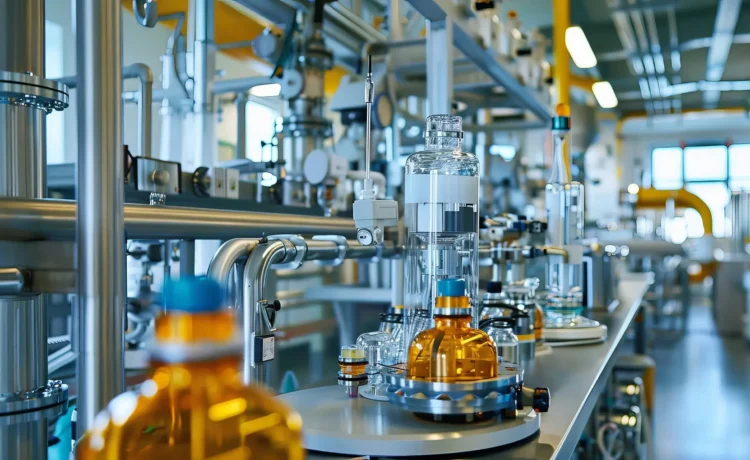
Flow chemistry represents a significant advancement in chemical processing, allowing for continuous reactions rather than traditional batch processes. This method enhances efficiency, reduces reaction times, and improves product quality. By employing modern reactor technologies, chemical engineers and manufacturers can achieve greater control over reactions, which is particularly beneficial in the pharmaceutical and industrial chemical sectors.
The role of flow reactors in chemical processing
Flow reactors are a central component of flow chemistry. Unlike conventional batch reactors, flow reactors enable the continuous input of reactants and the output of products, leading to several advantages:
– Increased efficiency: Continuous operation minimizes downtime, allowing for higher throughput.
– Enhanced control: Real-time monitoring of reaction conditions leads to improved consistency in product quality.
– Scalability: Flow reactors can be easily scaled up or down, accommodating varying production demands.
The integration of flow reactors into production processes can be transformative, especially for pharmaceutical manufacturers looking to optimize their workflows and reduce production costs.
High pressure reactors and their applications
High pressure reactors are essential for certain chemical reactions that require elevated pressures to proceed effectively. These reactors are specifically designed to handle the challenges of high-pressure environments, offering several key benefits:
– Expanded reaction scope: Many reactions that are inefficient or impossible under atmospheric pressure can be successfully conducted in high-pressure reactors.
– Improved yield: Higher pressures can lead to increased reaction rates and improved product yields.
– Safety enhancements: Modern high-pressure reactors are equipped with advanced safety features, reducing risks associated with high-pressure operations.
Utilizing high pressure reactors in conjunction with flow chemistry can lead to significant advancements in process efficiency and safety.
Autoclave reactors: A versatile solution
Autoclave reactors are another critical component in the landscape of modern chemical processing. These reactors are designed to withstand high temperatures and pressures, making them suitable for a wide range of applications. Their versatility allows for:
– Diverse applications: Autoclave reactors can be used for various chemical reactions, including polymerizations, hydrogenations, and more.
– Efficiency in research and development: Their design facilitates rapid experimentation, allowing researchers to optimize processes efficiently.
– Scalable solutions: As with flow reactors, autoclave reactors can be scaled to meet the demands of both laboratory-scale and industrial-scale production.
These characteristics make autoclave reactors an essential tool for chemical engineers and researchers focused on advancing their processes and products.
Enhancing safety in modern chemical processing
Safety is paramount in chemical processing, and modern reactor technologies have made significant strides in this area. Flow chemistry, combined with advanced reactor designs, enhances safety through:
– Reduced hazards: Continuous processes tend to minimize the accumulation of hazardous materials, reducing the risk of accidents.
– Real-time monitoring: Advanced sensors and control systems provide continuous data on reaction conditions, enabling immediate responses to potential issues.
– Integrated safety features: Modern reactors are equipped with safety mechanisms that prevent overpressure and other dangerous situations.
By prioritizing safety, chemical manufacturers can protect their personnel and facilities while maintaining efficient and effective production processes.
The future of flow chemistry in chemical processing
As industries continue to evolve, the demand for more efficient, safe, and scalable chemical processes will grow. Innovations in flow chemistry and reactor technologies will play a crucial role in meeting these demands. The ongoing research and development in this field will likely yield new methodologies and equipment, further enhancing the capabilities of chemical engineers and manufacturers.
For those interested in exploring advanced reactor systems and equipment. By leveraging the benefits of flow chemistry, flow reactors, and high pressure reactors, chemical manufacturers can enhance their processes, leading to improved efficiency, safety, and scalability in their operations.